
Yet Another War...
A Post-Materialist Meditation on the Nature of War in the Light of Sri Aurobindo

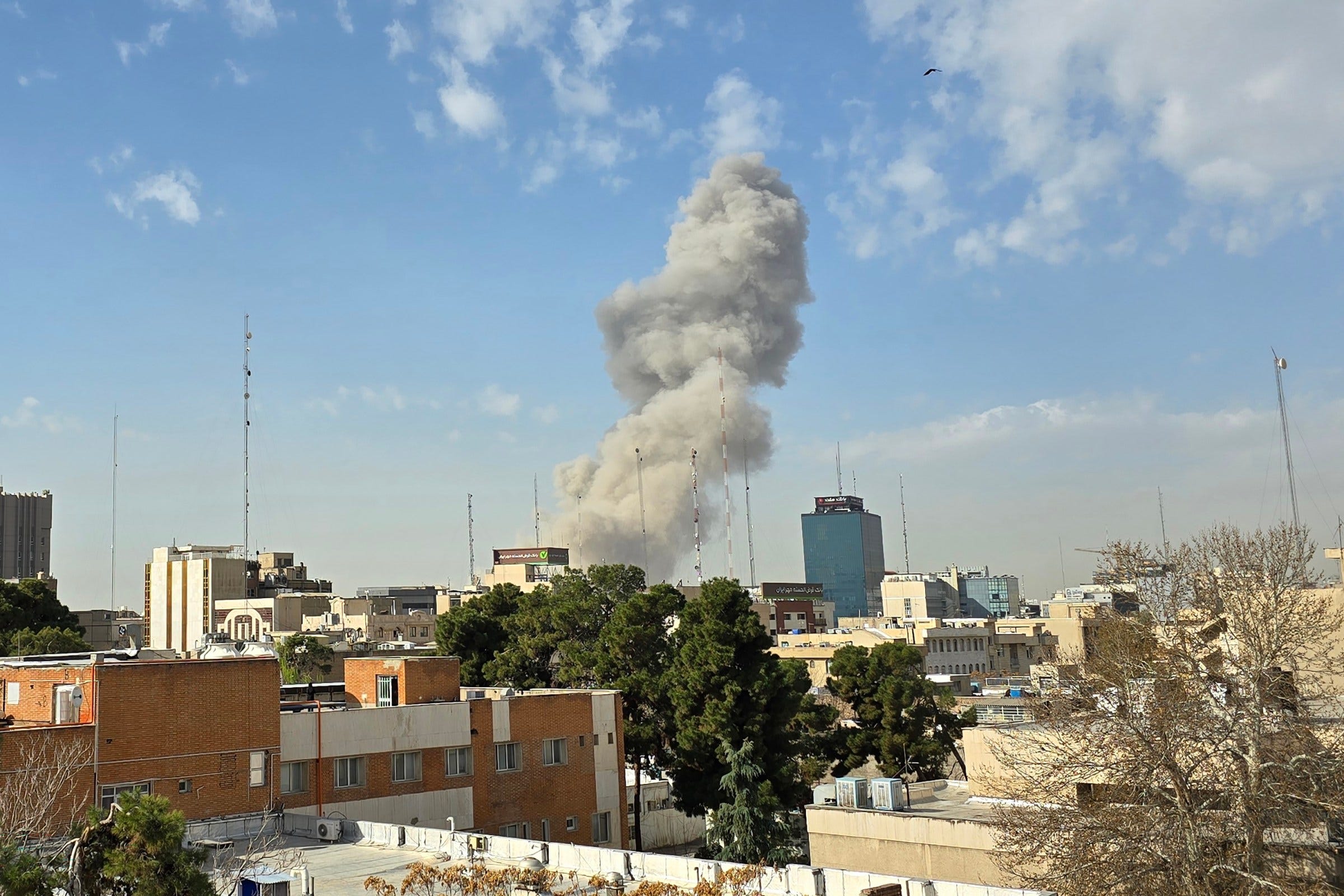
Here we are again, facing yet another war that will make an already uncertain world even more uncertain. The U.S. and Israel launch a major attack on Iran. It was expected, no surprise.
A common theme among commentators is that the true motives behind this conflict remain unclear. Few seem to accept Trump’s official justification for declaring war on Iran. This lack of clarity and of convincing motives for going to war leaves many with a general sense of bewilderment, a feeling that seems to ask: What are we doing? How did we reach this point again? Yet another war… Will humanity ever be able to free itself from war?
I do not want to write lengthy political analyses, nor do I wish to make predictions. I would only like to reflect on this more general, sociological question: why has the human being always been so prone to belligerence and to those organized conflicts we call “war”?
I remember how, after the fall of the Soviet Union, many of us (myself included, at least in part) allowed ourselves to believe that a new historical opening had arrived. It seemed, for a brief moment, that humanity might finally have the opportunity to lay the foundations for a world without conflict, a world built upon lasting international cooperation. No more cold wars, no more hot wars.
Yet, in hindsight, that hope now appears painfully naive. It was no less simplistic than the old slogans of “make love, not war,” or the kind of pacifism that believed, and to a large extent still believes, that laying down weapons, pursuing disarmament, and trusting that others will follow might be the ultimate solution, the genuine and final path to peace. While the currently widespread idea that the root cause of all evil lies in capitalism, greed, or the insatiable drive to seize land, natural resources, or oil fields, and that, once these have been eliminated or restrained by some regulatory machinery, war will no longer be possible, remains a rather superficial understanding of the deeper forces that drive human beings to take up arms.
History, however, has a way of dissolving such illusions. The dream of peace, when built solely upon institutional agreements or moral exhortations, often encounters the stubborn persistence of human passions, fears, ambitions, and the perennial desire for power and security. What appeared as the dawn of a new age was, perhaps, only another chapter in humanity’s long oscillation between hope and disillusionment.
Everything seems to suggest that many human aspirations, such as the hope for a perfected society or for lasting peace, are genuine and deeply meaningful. But the time has come to recognize how such dreams cannot be brought into being merely through new ideologies, new political or economic orders, or even through futuristic technologies. It is this mechanistic conception of humanity that continues to sustain the belief that trade, democracy, science, or international diplomacy alone might eliminate war. Yet history has repeatedly shown that such hopes, though noble, have either failed or achieved only limited and fragile success in the face of what seems to be a more enduring and deeply rooted human inclination toward conflict. Beneath the surface of our personality lie deeper forces driven, consciously or unconsciously, by desires for power, dominance, and security. These forces have repeatedly stood in the way of peace, or at best tempered its realization, like persistent tides eroding the fragile shores of human ideals.
However, it is equally true that opposing psychological forces also exist and express themselves in our surface personality, such as feelings of commonality, solidarity, and empathy. For beneath the surface of history, something more enduring is at work. Contrary to the still deeply rooted materialistic faith of our age, human beings are not mere machines that can be repaired, optimized, or recalibrated through external design alone. They are complex beings of psyche and spirit, shaped as much by invisible inner forces and “soul factors” as by the visible architecture of their societies. The true sources of conflict and harmony alike lie not only in the world we build around us, but in the deeper, unseen landscapes of the human soul.
If we move beyond this commercial and material mindset, we may begin to see that the disappearance of war cannot be achieved merely through political arrangements, economic interdependence, or technological progress. True and lasting peace requires something deeper: an inner evolution of human consciousness itself. Only when the human being changes from within, and the center of gravity shifts from the isolated self toward a wider sense of shared existence, can the roots of conflict truly begin to dissolve.

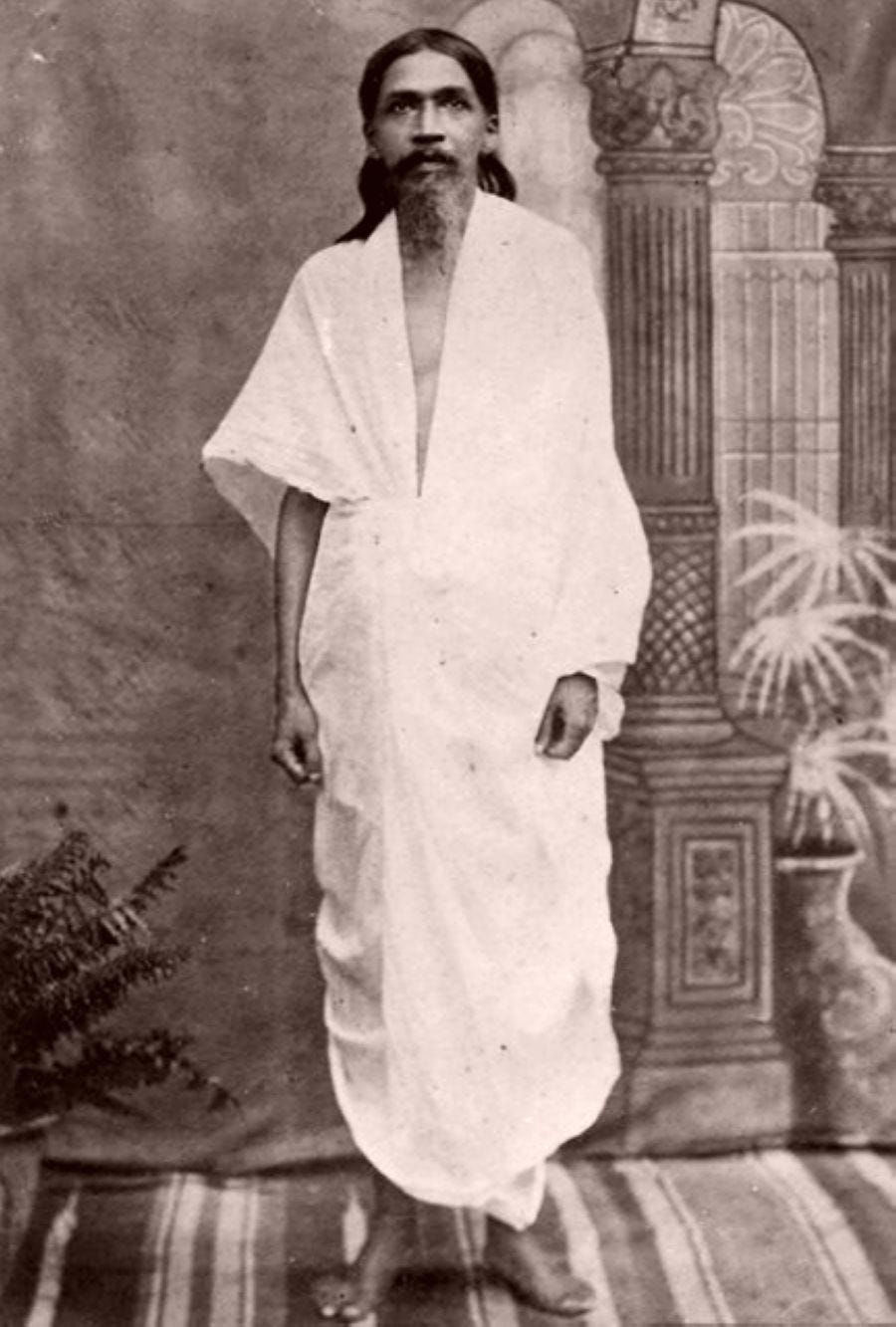
The deepest description of the nature and origin of war from a spiritual perspective that I have found most convincing is Sri Aurobindo’s, expressed at length in his trilogy “The Human Cycle,” “The Ideal of Human Unity,” and, most directly relevant to the present topic, “War and Self-Determination.”
Sri Aurobindo argued that humanity is moving toward higher states of consciousness and collective awareness, culminating in what he called a “supramental consciousness” in which individuals experience unity in diversity rather that unity in uniformity, not as an abstract moral ideal but as a lived spiritual reality. From this perspective, war is a symptom of the fragmented egoic stage of human development, where nations and groups identify primarily with separate interests. A true and lasting peace would require the transformation of human nature itself: the expansion of identity from the individual and national level to a universal spiritual consciousness in which others are experienced as extensions of one’s own being. External institutions may temporarily regulate conflict, but only a deeper inner awakening can eliminate the psychological roots of war.
War can truly disappear only when humanity rises beyond the narrow boundaries of the separate self and awakens to a deeper sense of shared being and inner unity realizing how, despite all the differences, deep down, we are all part of one human family with each nation and each individual trying to express an aspect of the Divine. No external system, however well constructed, can permanently dissolve the roots of conflict. Political arrangements, economic interdependence, or institutional structures may only transform the outer expression of discord; they cannot extinguish its source. For war is ultimately born from divisions within the human consciousness itself, from fear, isolation, and the restless assertion of the ego. Only when humanity undergoes a profound inner transformation, when the movement of consciousness expands from the individual to the universal, can the foundations of conflict begin to fade and the harmony of a higher order of life emerge.1 I will let him express this spiritual ideal better than I can.
“So long as war does not become psychologically impossible, it will remain or, if banished for a while, return. War itself, it is hoped, will end war; the expense, the horror, the butchery, the disturbance of tranquil life, the whole confused sanguinary madness of the thing has reached or will reach such colossal proportions that the human race will fling the monstrosity behind it in weariness and disgust. But weariness and disgust, horror and pity, even the opening of the eyes to reason by the practical fact of the waste of human life and energy and the harm and extravagance are not permanent factors; they last only while the lesson is fresh. Afterwards, there is forgetfulness; human nature recuperates itself and recovers the instincts that were temporarily dominated. A long peace, even a certain organisation of peace may conceivably result, but so long as the heart of man remains what it is, the peace will come to an end, the organisation will break down under the stress of human passions. War is no longer, perhaps, a biological necessity, but it is still a psychological necessity; what is within us, must manifest itself outside.
Meanwhile it is well that every false hope and confident prediction should be answered as soon as may well be by the irony of the gods; for only so can we be driven to the perception of the real remedy. Only when man has developed not merely a fellow-feeling with all men, but a dominant sense of unity and commonalty, only when he is aware of them not merely as brothers—that is a fragile bond—but as parts of himself, only when he has learned to live not in his separate personal and communal ego-sense, but in a larger universal consciousness can the phenomenon of war, with whatever weapons, pass out of his life without the possibility of return. Meanwhile that he should struggle even by illusions towards that end, is an excellent sign; for it shows that the truth behind the illusion is pressing towards the hour when it may become manifest as reality.” - From “War and Self-Determination - The Passing of War?”
The subscription to “Letters for a post-material future” is free. However, if you find value in my posts and would like to support my work, please subscribe and recommend the newsletter to others, and make a small financial contribution by buying me one or more coffees. You can also support me by ordering one of my books or follow one of my online courses. Thank you in advance!
One might argue that the recent resurgence of nationalistic and isolationist tendencies appears to contradict this vision. Yet I would suggest, rather, that it is precisely because a deeper psychological sense of oneness is slowly awakening within the human collective that these forces of division, separation, and self-assertive “me-first” impulses are rising in resistance. For whenever the consciousness of humanity moves toward a wider unity, the old habits of the separative ego reassert themselves with renewed intensity, as though defending the boundaries of the smaller self against the pressure of a greater and more universal life seeking to emerge.
Well said, Marco!
You wrote, "True and lasting peace requires something deeper: an inner evolution of human consciousness itself. Only when the human being changes from within, and the center of gravity shifts from the isolated self toward a wider sense of shared existence, can the roots of conflict truly begin to dissolve."
I couldn't agree more. And the stresses of these times are catapulting humanity closer and closer to that change point. By bringing the human frailties [greed: billionaires and corruption - lust: Jeffrey Epstein and his elite class - dehumanization of the "other": anti-immigrant policies, white nationalism, etc.etc.] that are at the roots of war and violence of every kind, to the fore, it is becoming clearer and clearer to the general public how we as a human species need to clean ourselves up inwardly, if we're ever going to realize our dreams and deepest values in our outer world.
And then there is this:
https://aurocafe.substack.com/p/a-sunset-of-europe