
What is Beauty?
Is beauty a human projection or a glimpse of a deeper cosmic harmony?

Being inspired by the beautiful paintings of my friend Vittorio Marchesi, an artist living near Venice, Italy, I could not escape my usual tendency to ask philosophical questions with my familiar mystical nuances.
We often say that beauty is in the eye of the beholder: that it is a human and social construct, rather than something that exists objectively in the world, like stones, buildings, and mountains “out there.”
Indeed, what appears beautiful to me may not evoke any aesthetic response in others. The appreciation of a painting, a musical composition, a sculpture, living creatures, or even the non-living forms of Nature can evoke profoundly different feelings and aesthetic perceptions in each of us.
Yet there are things that almost all of us recognize as beautiful, or as pleasurable to contemplate, or at least as something that we would not normally describe as ugly. A rose, for example, with its intense colors and complex structure, seems to possess a beauty that transcends individual preference.
Why do certain forms, patterns, and rhythms appear universally appealing? Is beauty merely a projection of the human mind, or does it reveal something deeper about the structure of reality itself?
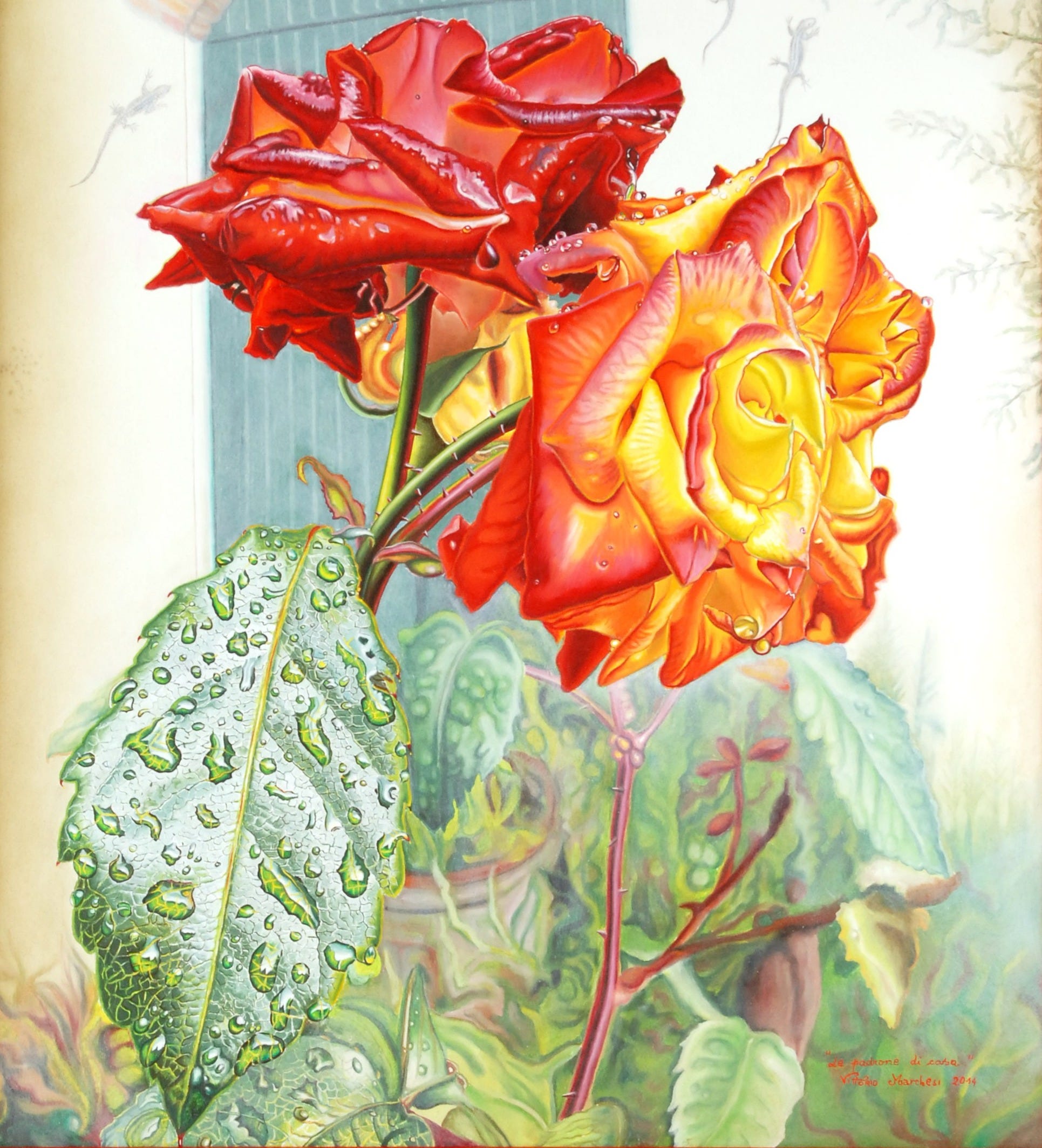
The beauty of flowers has always inspired artists across cultures and throughout history to capture their appearance in paintings and other forms of artistic expression. However, the modern naturalist, especially those who view Nature through the lens of evolutionary biology, would reject this interpretation. From this perspective, beauty is not an intrinsic property of the natural world but rather the outcome of adaptive processes shaped by natural selection. It is a matter of genetics, evolutionary functions, reproductive strategies, and survival advantages. The colors, forms, and fragrances of flowers, for example, are not there because they are beautiful in themselves, but because they serve biological functions: attracting pollinators, facilitating reproduction, and increasing the chances of transmitting their genetic pool.
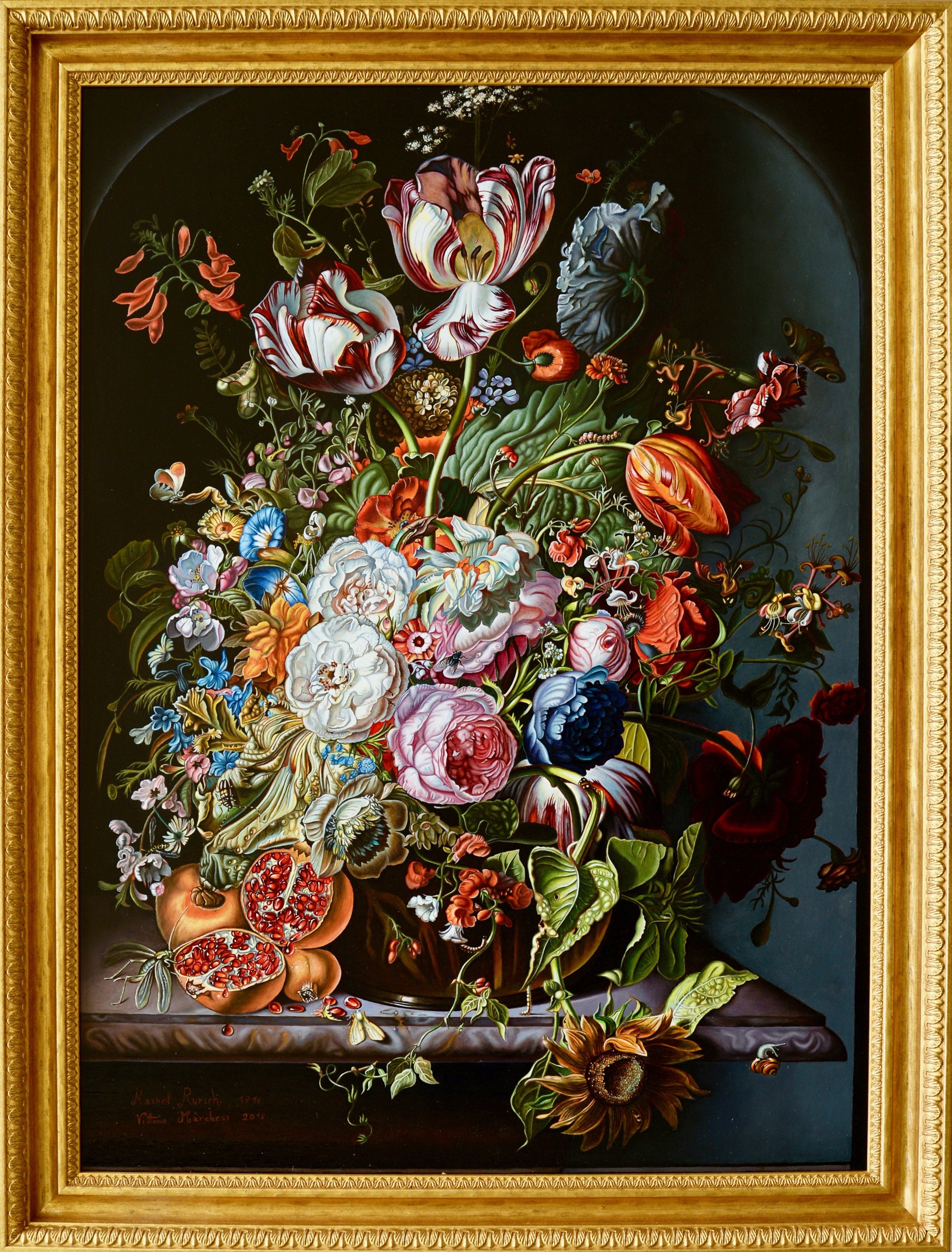
Consider, for example, the feathers of a goose. Their beauty lies in their texture and elegant arrangement; the delicate layering of each feather, the precision of their structure, and the symmetry of their plumage can evoke a sense of aesthetic awe.
But the materialist will quickly point out that we should not “anthropomorphize” Nature. There is nothing inherently beautiful or poetic in these features. They are the result of millions of years of natural selection, shaped by survival and reproductive pressures. Feathers evolved for functions such as flight, insulation, and protection, while also playing roles in species recognition, communication, and sexual selection.
We should therefore refrain from attributing beauty and harmony to Nature, just as we should refrain from seeing aims or purposes in its phenomena. From this perspective, there is no beauty, no intention, and no purpose. There are only the expressions of evolutionary adaptations that enhanced survival and reproductive success.
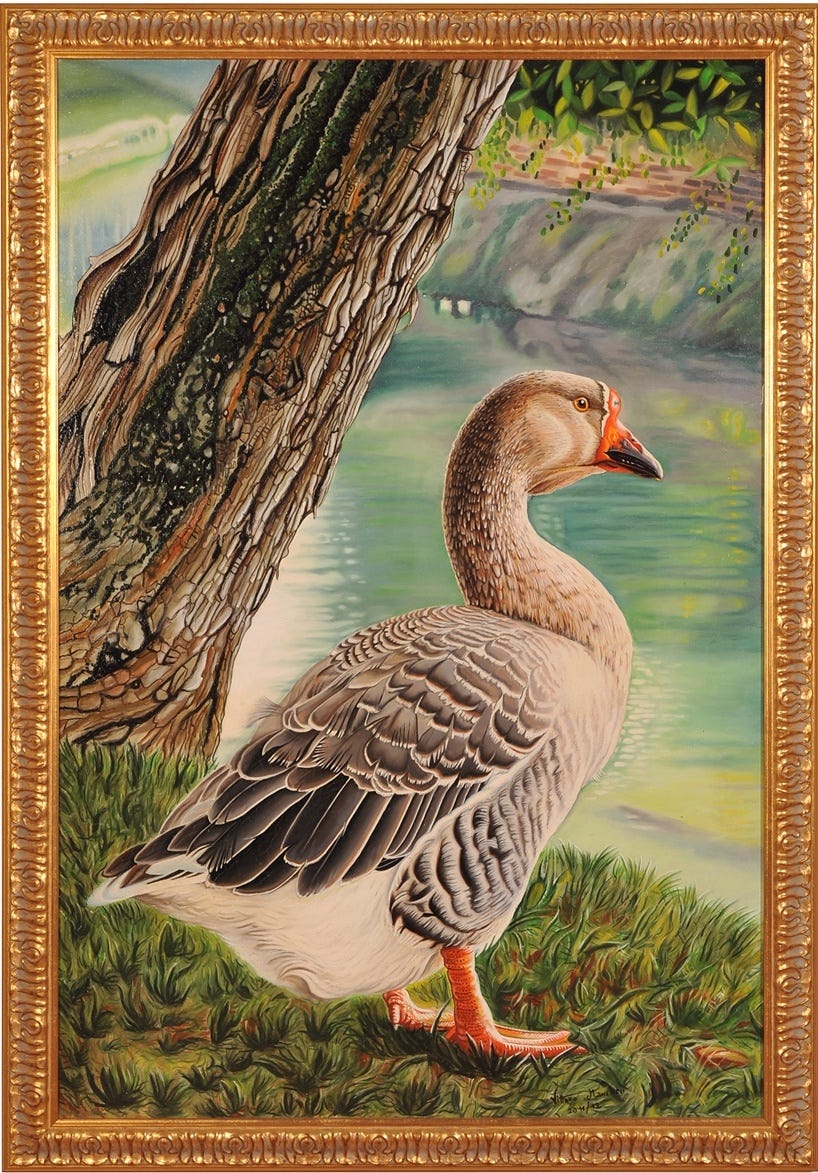
Maybe. But the conviction that everything is ultimately only the expression of blind Darwinian natural processes is itself a metaphysical assumption, a hypothesis, a conjecture that appeals to the physicalist mind because it aligns with a particular philosophical preference.
Whatever the case may be, the fact remains that artists throughout history and across cultures have attempted to reproduce or imitate, through their works, something they apprehend, though not always comprehend. Although the mind is limited to the perception of superficial appearances, something within us seems capable of capturing an indefinable harmony and complexity in Nature experienced as a distant yet concrete call of principles embedded in the deeper structures of reality itself.
Is this, too, merely an instinct shaped by the demands of survival and reproduction?
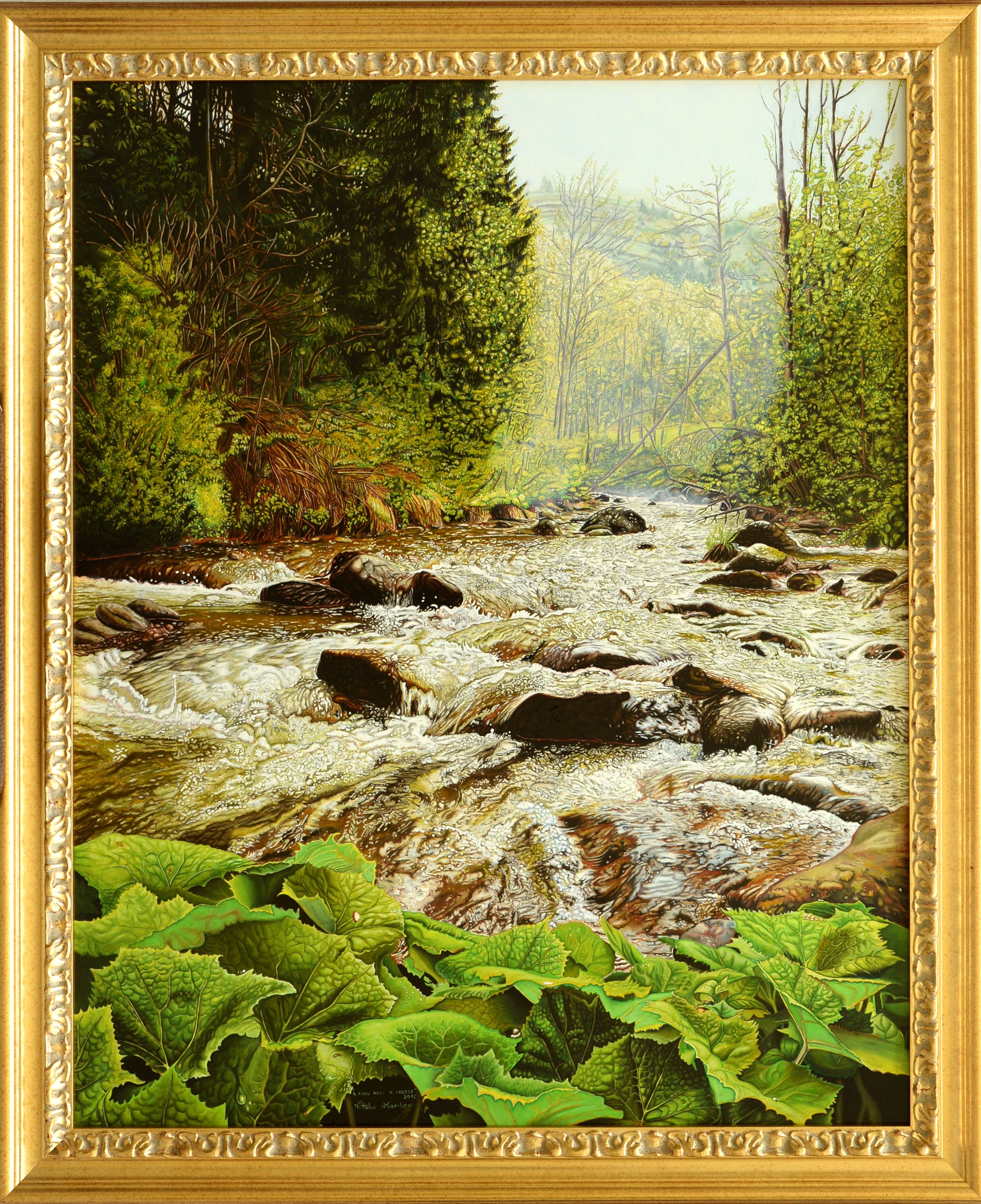
Even a simple river flowing through a tiny forest seems to reflect something that goes beyond a mere blind and aimless chain of causes and effects. The fading green of the trees, the water dancing over stones, and the all-embracing canopy of leaves suggest to me something more than just a mechanism for preserving the selfish gene.
But one can perceive a mixture of beauty and decadence also in non-natural, human-made artifacts. Venice is known for its architecture, its labyrinth of canals, and the reflections shimmering on the water. Yet not everybody appreciates its aging and decaying buildings, its many dirty streets, or the chaos of tourists during the high season. Nonetheless, it has inspired artists, poets, and dreamers for centuries. I guess that this has less to do with its outer appearance and more with what the atmosphere of the place evokes: a past society without cars and the noise of machines, where the rhythms of life were more closely aligned with that of the soul.
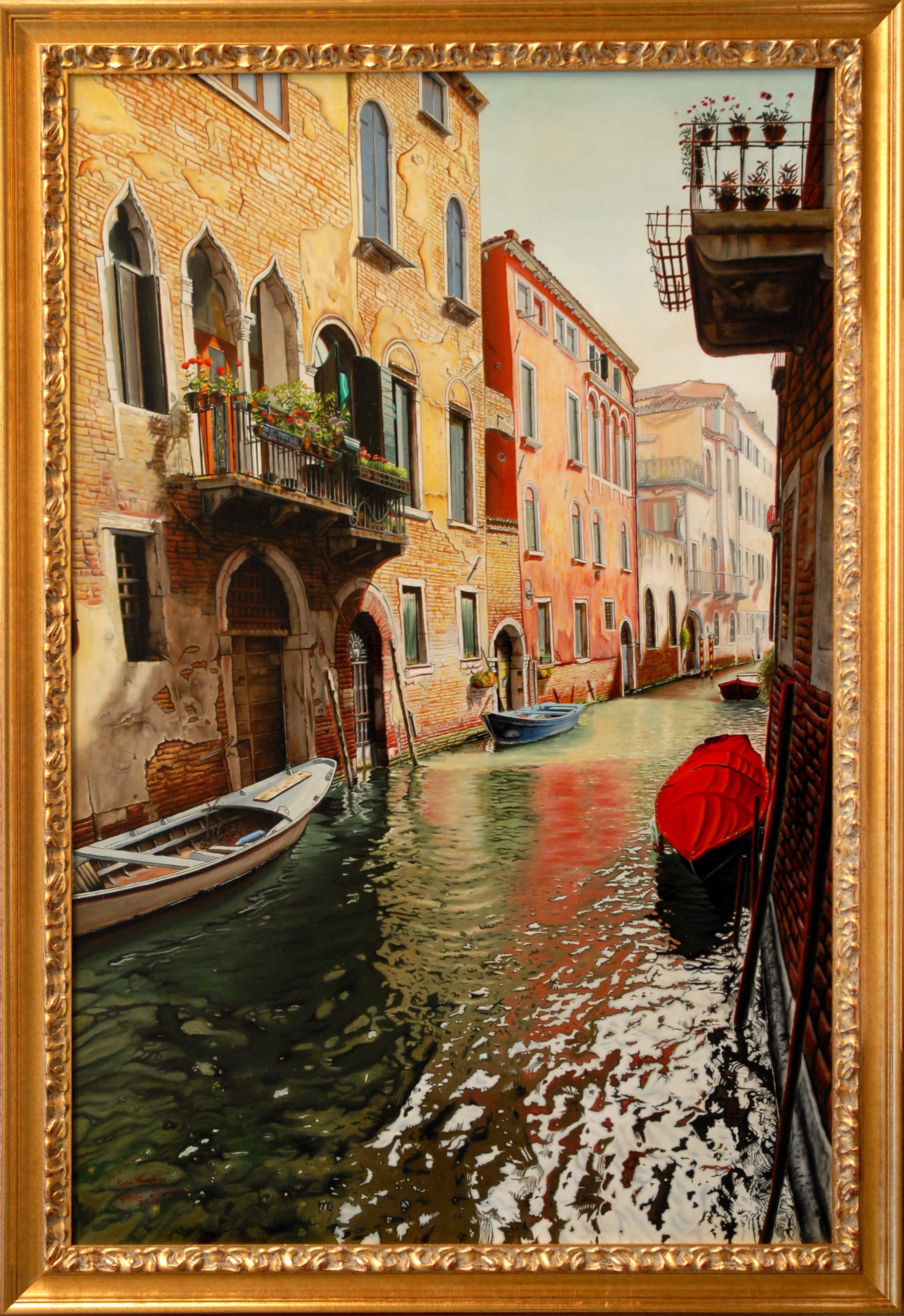
So, what is beauty?
Well, I think the answer depends on our philosophical preferences and, most of the time, on our often unconscious metaphysical commitments.
I prefer to take the point of view of Plotinus. For Plotinus, beauty is the manifestation of a deeper metaphysical order. Physical beauty arises when matter is shaped by an inner spiritual light, reflecting the otherwise unintelligible harmony of the higher realm. It is the soul that recognizes in the beauty of physical forms something of its own nature. Beauty is a kind of remembrance and longing for a divine origin, drawing the soul upward from the visible world toward the contemplation of the Intellect (Nous) and ultimately toward the ineffable source of all beauty, the One. Beauty is therefore not simply something the mind projects onto the world; it is a trace of a higher reality and quality shining through the structures of the world, and that the human art attempts to capture and reproduce within the limits of its own forms of expression.
Great article!
I always find myself in awe that we can grasp and appreciate beauty. How less gracious life would be if we could not. I feel so grateful.
Great post—a topic that has been on my mind lately.
I tend to think that without beauty, there would be little reward for the mathematician or physicist to discover more elegant equations. I would say the strange notion that beauty is merely some subjective human projection makes a mystery of the inner workings of science itself. Perhaps beauty lies at the heart of intelligibility.
Enjoyed the paintings! Brought back some memories…I was in Venice for only one day and was sick, but I still found it enchanting, despite the bad food and tourists. (But the food was probably second only to British food in badness.)