
Mystical Cosmologies - Part III
What is the Purpose of the Universe? Constructing the Cosmic Animal in Plato's Timaeus


I’m truly delighted to present a guest contribution by Tina Lee Forsee who has written a fascinating essay on Plato’s “Timaeus” as the third installment in the Mystical Cosmologies series (here are Pt. I and Pt. II). Writing insightfully about the vast landscape of humanity’s ancient cosmologies is no easy task, and I certainly wouldn’t claim mastery over such a field. That is precisely why I turned to Tina—someone with expertise in Platonic philosophy—to contribute a piece on the Timaeus. The result is a rich, illuminating, and beautifully crafted overview that not only stands on its own merits but also fits seamlessly into the broader arc of this series!
Even though Plato isn’t considered a “mystic,” there are good reasons to think that he was. In Forsee’s words: “Plato often alludes to higher truths, but won’t disclose them. In the Phaedrus he implies that truth can’t be expressed in dead symbols; the written word can’t defend itself. Meaning lives in souls. This explains why he wrote in dialogue form. He forces readers to interpret him more explicitly, which means consulting with the “measuring stick” of inner truth, not just the words on the page. Plus, in Ancient Greek religious traditions is the idea that you have to be careful not to speak divine truths to those who aren’t ready to hear them. Truths can only be revealed to the “initiates”.
We see this idea in the Symposium when he has Diotima, a mysterious wise woman, teach a young Socrates about love, though she tells him he may not be ready to hear the full account—he’s not “initiated”. Even so, she describes a “ladder of love” which ascends from the love of one person to the love of many and up the “rungs” of the sciences to the top, mirroring the cosmology of “becoming” we see in the Timaeus. Eventually she speaks of a “beauty” that’s a vision “beyond reason”—a transcendent vision that explains the entire ladder of love.
Then the drunken politician playboy, Alcibiades, crashes the party and tells everyone about his failed attempt to seduce ugly Socrates—at the height of transcendence, everything suddenly comes crashing back down to earth. When Diotima says, “Love is the desire for permanent possession of the Good”, her meaning is made clear in this humorous little drama. Even our base desires for sex, fame, glory, etc, are reflections of our transcendent desire for the Good.
The transcendent intuition of the whole may be the most mystical thing about Platonic thought that he’s willing to put into writing. He seems to be saying it’s through reason that we can transcend reason. Epistemology mirrors ontology. Everything in the so-called real world is informed by the transcendent vision Diotima speaks of; the everyday world is not completely separated from the divine. But what about this vision? He won’t tell us anything more. This is what Plato lovers make themselves crazy trying to figure out. What’s hidden in the texts? There must be clues!“
Thus, I decided to include the Timaeus in the “Mystical Cosmologies” series, because what I see in it the attempt of the rational and intuitive mind to long for those “higher spheres” we already glimpsed in the Gnostics and Kabbalistic panpsychism. It was the rational, analytic mind doing its best to reach for higher states of consciousness given the limited knowledge of the time. Something that aspired to build a bridge between what we would nowadays call science and mathematics, and those mystical visions of reality that characterize the spiritual wisdom of all religions. The kind of bridge we are trying to build here, one that centuries of materialism and the strict third-person investigation of reality has forgotten. Something that is neither science nor mystical insight, but a metaphysical philosophy that tries to transcend itself and, thereby, intuits, perceives, and feels more than itself. It listens to the whisperings of a higher mind that connects with precisely those themes of the mystics, such as the intuition that the body is a soul-manifestation, that souls reincarnate, that Nature is a living entity, that the universe is teleological, reaching the conclusion of what we call “philosophical idealism” and leading us to the “cosmic animal”: an ensouled universal consciousness that is vitalistic and intimately related to beauty, aesthetic values, love, and striving. Yet without losing grounding in material reality and down-to-earth philosophical questions, such as the role of numbers, geometry, and what Wheeler called “the unreasonable effectiveness of mathematics in the natural sciences,” or the essence of matter, form, and evolution. In this sense, the Timaeus is ancient and yet more relevant than ever. We can see this in the renaissance of the (still too analytic) contemporary metaphysics that rediscovers panpsychism, idealism, and the problem of consciousness, and is dangerously on the verge (we are not there yet, but it is only a matter of time) of breaking scientistic taboos, for example by reconsidering PSI research and taking mystical experience more seriously. In this sense, the Timaeus is an ancient form of intuitive cognition that has not been surpassed, only forgotten, and slowly resurging, like a phoenix from the ashes.
Plato’s Timaeus is, as translator Peter Kalkavage remarks, “so strange that one wonders whether anything in it can be taken seriously.” I take it he means to caution readers not to mistake the dialogue’s playfulness and creativity for an earnest, if primitive, attempt at science. What we find on a closer reading is a mythic-scientific cosmology responding to the philosophical traditions of Plato’s time.1
“Plato can show us how to think of our bodies as the manifest presences of our souls. He can also open our eyes to a way of understanding nature as a living organism, rather than tinkering with it as a biochemical mechanism.”
Democritus and the Limits of Materialism
For Democritus, everything reduces to fundamental indivisible atoms (atomos means “uncuttable”). His mechanistic universe, driven solely by deterministic laws and chance, excluded purpose and value from the cosmic picture altogether. Living organisms were nothing but temporary configurations of atoms moving through an infinite void—a view that posits continuity between the living and non-living, but at the cost of reducing life to “emergent” spatial arrangements of inert matter.
Timaeus’ account is, by contrast, unabashedly teleological, but it, too, posits a fundamental continuity of life. When he says the soul is “older” than the body (34C)2, he’s making a point we often hear today: you can’t get life from dead matter. Which explains why his geometric “atoms” are less like material building blocks and more like desiring organisms. Whether he meant to caricature ancient atomic theory or signal a departure from the eliminative materialism of Democritus, or both, it’s hard to say.
Whatever the case, his “atoms” are two types of triangle. Mirroring the two causal forces at work in the cosmos, unity and indefinite many-ness, Timaeus picks the isosceles for its “single nature”, and the scalene for its “indefinitely many” natures. Out of the many scalene triangles, Timaeus chooses the equilateral for being “the most beautiful”. (54B)
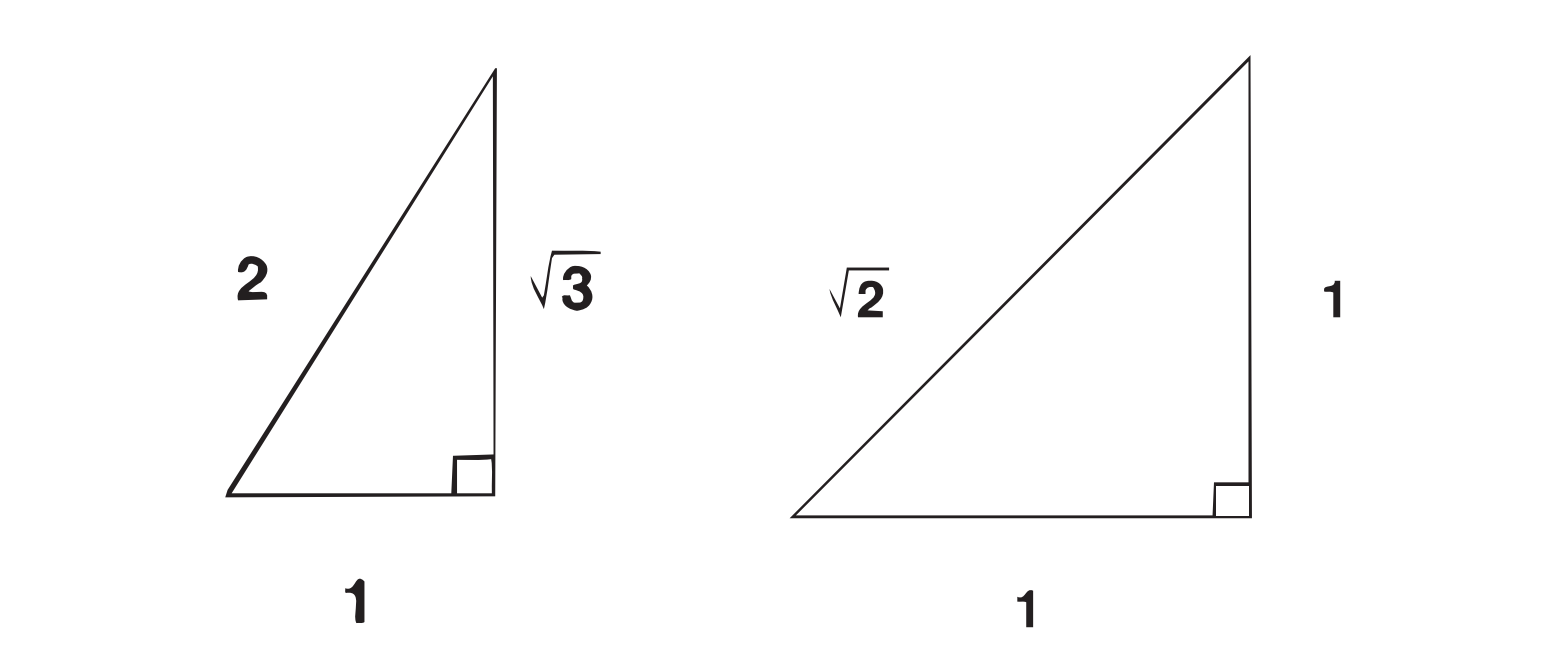
From these he constructs the classical elements—earth, water, air, and fire (and aether)—each represented by a Platonic solid.
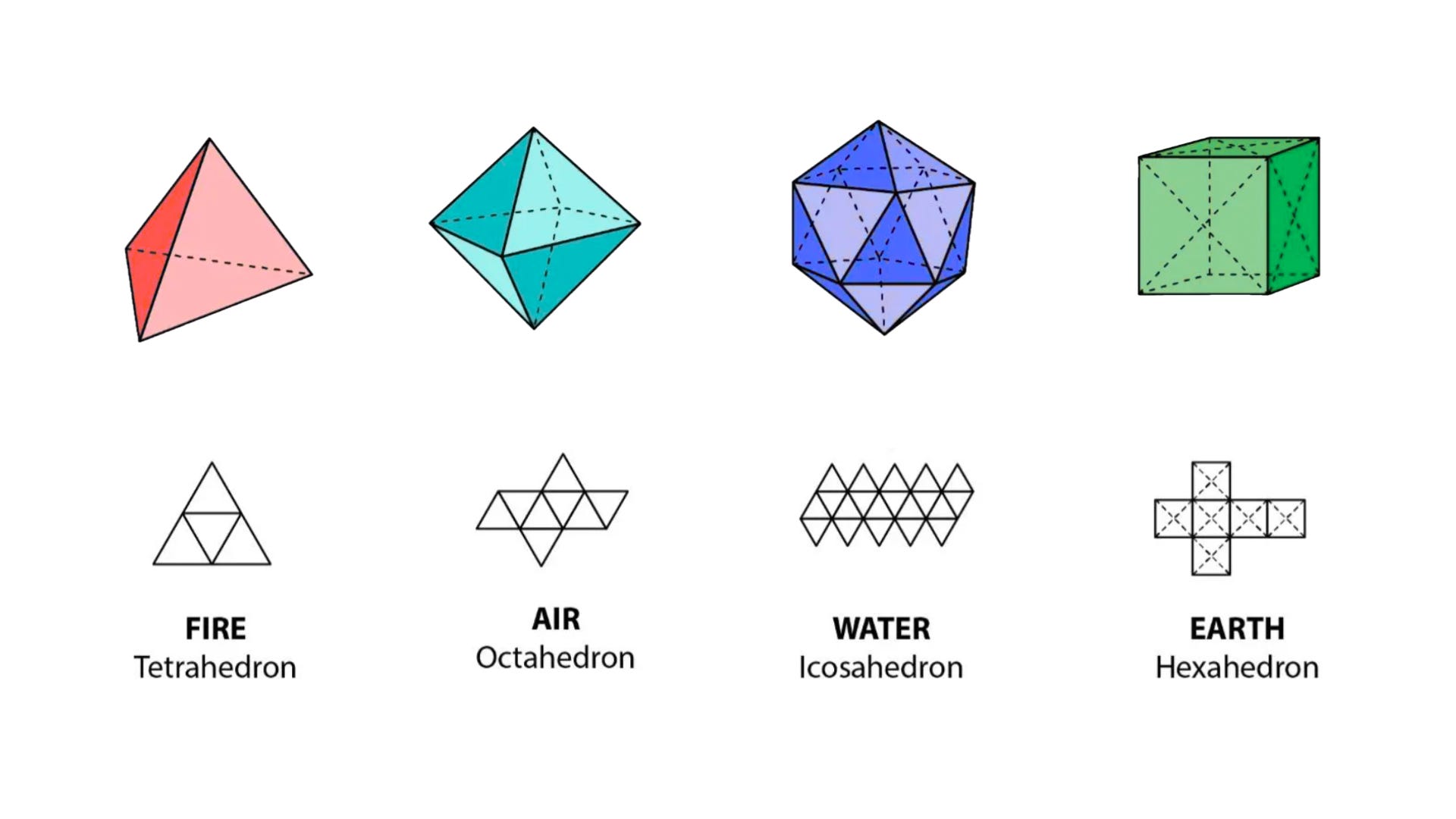
At first glance, the Platonic solids seem, well, solid. When Timaeus says we should think of them as being too small to see individually, I picture little particles floating about like dust motes (56C). But when he talks about the triangles inside our bodies, they morph into cellular-seeming organisms that battle against their environment, defect (cancer), or simply wear out from old age.
“the roots of the triangles are slackened as a result of numerous conflicts they have waged against numerous adversaries over a long period of time”. (81C-D)
Then I remember he’s talking about mathematical triangles, which are impossible to see. This raises the question: if you can’t get life from dead matter, how can you get life from math? It’s a classic Platonic paradox, yet it has perplexed many, including Aristotle.
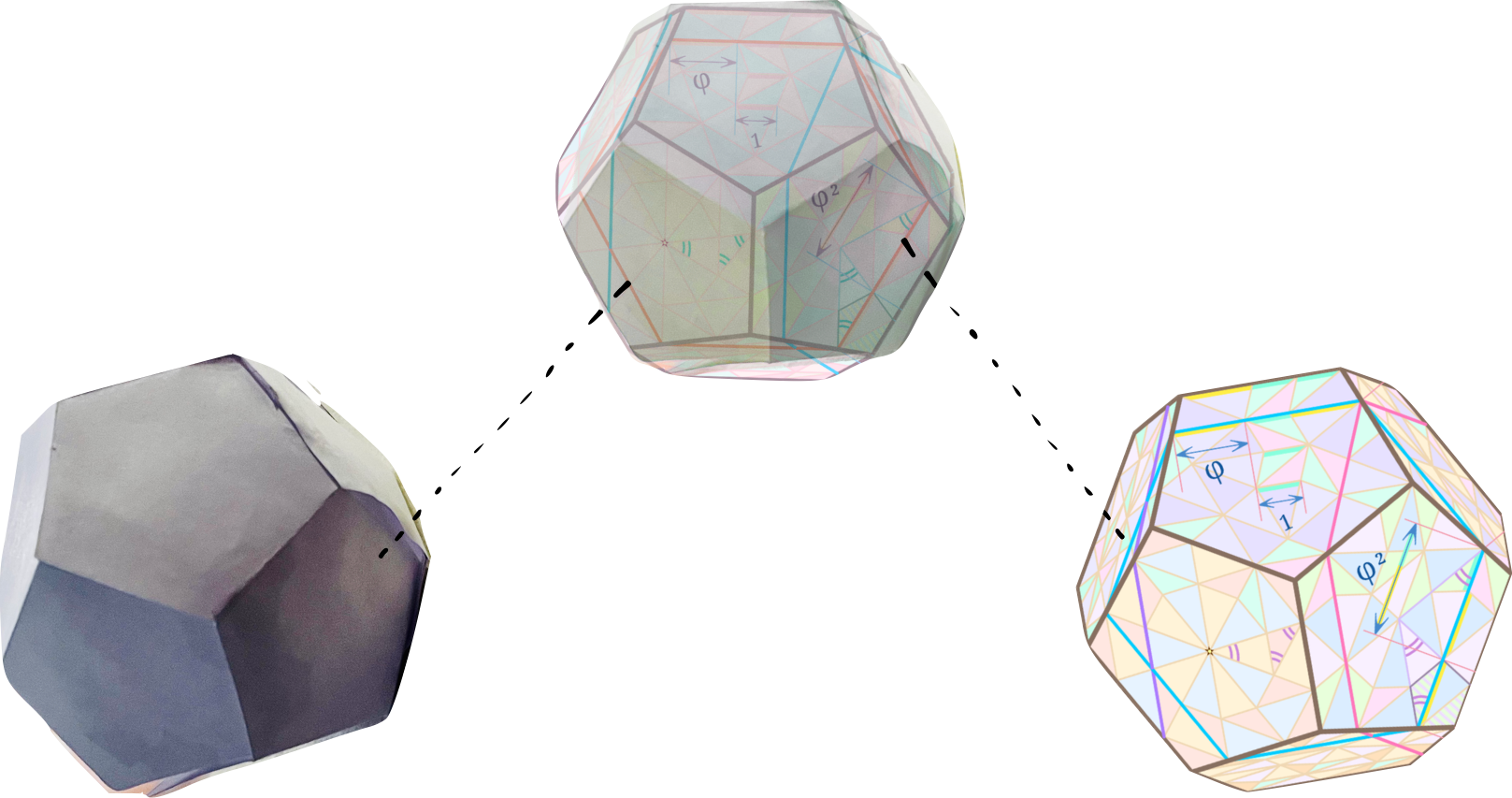
What do we make of it? Timaeus could be “giving free rein” to “a temperate and prudent sort of play” that we call science, but it’s hard to know for sure (59C-D). Perhaps he wants to close the gap between the tangible world of ordinary sense experience and the ideal world of abstract mathematic reasoning. Or maybe he’s trying to show us there is no gap: the triangles don’t have to be material to have a “material” effect in the world.
Matter Doesn’t Matter
Neo-Platonists tried to read the Aristotelian concept of “prime matter” back into Plato, but the word for matter, hyle, makes no substantial appearance in the Timaeus.3
For Plato, a form is what makes a thing a thing. But it’s not some otherworldly idea floating in the clouds or locked between your ears. Your big toe is a form. “Form” isn’t a technical term, either, since he uses other words to describe whatever it is that supports sameness across change.
“For a thing to become different it must remain the same. If you deny this, then you are embracing a doctrine of Heraclitean flux. No doubt the world is ‘fluxed up’ but it is not that ‘fluxed up.’ ”
William F. Vallicella, On the very idea of a cause of existence
Nevertheless, at one point Timaeus confronts the possibility that form could be “nothing but a word” (51C). However, without forms, nothing would be intelligible. We wouldn’t even have distinct things. So Timaeus prudently “casts his vote” in favor of the forms.
But the world can’t be All-Form either, as Parmenides would have it, since clearly we live in a world where things, plural, change. Timaeus points out that we only ever see what we call phases of matter, as when water turns to ice, but no one has ever explained the true nature of the elements as individuals (48A-50A). Later he makes it clear that his triangles are not like Democritus’ indestructible atoms: “But as for the triangle…we must never, ever say that these things are, since they shift right in the middle of our positing them” (50B-C). He rejects theories that posit stable elements to explain change. Instead he models what I’ll call the form of flux.
Having previously posited a “second kind”—Necessity, or the “wandering cause”—to explain objects perceived through sense perception, he now needs a “third kind”, an indestructible “seat for all that has birth” which he describes as:
“graspable by some bastard reasoning with aid of insensibility and hardly to be trusted, the very thing we look to when we dream and affirm that it’s somehow necessary for everything that is to be in some region and occupy some space, and that what is neither on earth nor somewhere in heaven is nothing.” 52A
This third kind he calls the Receptacle or Khora (Space), and he portrays it both as an active, fluctuating matrix that shakes things like a winnowing sieve, and as a passive, womb-like receiver of processes such igniting and liquifying.
There is no substantial substratum, only the matrix.
Evolution in Empedocles
A more positive influence on Plato comes from the poetic cosmology of Empedocles, which includes four “roots”—the classical elements we’ve already seen, earth, air, water, and fire. These combine randomly to produce animated body parts, which also combine randomly. Combinations that happen to produce viable functions survive, whereas those that produce monstrosities (like man-faced bovine) die out.
“There budded many a head without a neck,
And arms were roaming, shoulderless and bare,
And eyes that wanted foreheads drifted by.”
Empedocles, On Nature, Strange Creatures of Olden Times, 54-61
Although Empedocles limited these processes to the early formation of the cosmos, this marks the beginning of an evolutionary theory with something like natural selection.
Timaeus’ account of reincarnation might be thought a kind of devolution (a common theme in the Platonic dialogues) beginning with man as the paradigm: cowardly or unjust men become women, overly-empirical astronomers become birds, and the rest descend into various mammals, reptiles, aquatic life, and finally shellfish, who dwell in the abyss (91D–92C). Elsewhere, Timaeus says the gods created hair and fingernails knowing that “one day women and other beasts will come to be from men” (76D-E). Presumably he couldn’t figure out why men should have fingernails, and so contrived a story in which the demiurge or “craftsman” designed nails as a precursor for the talons and claws that lesser creatures would need to survive. (Which implies that, unlike men, women would have a use for their “claws”.)
The famous origin myth from the Symposium turns Empedocles’ anatomical serendipity on its head. A fictionalized Aristophanes tells of an equally “strange creature of olden times”: our primeval ancestor. Apparently we descended from round, eight-limbed, two-in-one beings composed “partly from men and partly from women” (in all possible configurations) who cartwheeled up Mount Olympus at astonishing speeds, threatening the power of the gods. As punishment, Zeus split them in two, and this is why we now spend our days searching for our “other half”. In this soulmate story, Aristophanes inverts Empedocles: rather than building life from the ground up through random combination, he breaks apart a unified whole to explain our longing for love as being divided from ourselves.
While pondering our almost-divine, self-sexual original self, we might fail to notice its underlying geometry—this will take the spotlight in the Timaeus.
A Self-Sufficient Sphere
Parmenides likened the sphere to the highest (and only) being, but it was Empedocles who brought it to life. His cosmology includes two fundamental forces, Love and Strife, representing opposing powers of unity and division—a causal dualism echoed in Platonic thought. Strife is a vortex that breaks Love apart, but when Love dominates, the four elements fuse together into a perfectly self-sufficient ball:
“The Sphere on every side the boundless same,
Exultant in surrounding solitude.
For from its back there swing no branching arms,
It hath no feet nor knees alert, nor form
Of life-producing member, — on all sides
A sphere it was, and like unto itself.”
On Nature, The Sphere, Fragment 28
Anyone familiar with the Timaeus will recognize these characteristics in the World Soul or Cosmic Animal (although he shies away from mentioning its lack of “life-producing member”):
“But for that animal that is to embrace within itself all animals, the fitting figure would be the one that has embraced all figures within itself, however many there are; so for this reason too, he worked it in circular fashion, sculpting it into the form of a sphere…” 33B
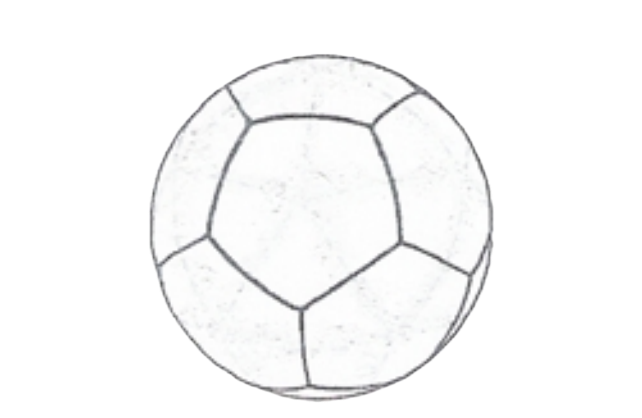
The Animal has no sensory organs, Timaeus says, because there’s nothing outside it to sense.
“…for the animal was artfully born so as to provide its own waste as food for itself and to suffer and do everything within itself and by itself, since he who put it together considered that the animal would be much better if it were self-sufficient than in need of other things.” 33B-34B
Like Empedocles, Timaeus embraces the sphere as the best form and describes the cosmos as self-sufficient, otherwise it wouldn’t be everything. And it must be alive, otherwise it wouldn’t account for the lives of the creatures inside it.
But Timaeus gently corrects Empedocles’ reduction of nature to the classical “elements” driven solely by a “wandering cause”, preferring instead to demote these physical “necessities” to supporting roles in a teleological framework.
Like Knows Like
We tend to think the universe is radically unlike us—out there, indifferent, valueless, meaningless—whereas for many ancient philosophers, Plato included, like can only be known by like. Nothing can be separated from nature, not even the scientists studying it with cool objectivity. Plato sought similarity at all metaphysical scales, a comprehensive commensurability of everything to everything. The structure of the starry heavens, political regimes, human psychology, animal communities, plants in forests, and even the smallest “particles” were, for him, reflections of one another and of one intelligible order.
Implicit throughout the Platonic dialogues is the idea that we must reach ahead of ourselves if we want to know ourselves. To do that, we construct our accounts as if there exists in each of us at least a vague knowledge of the whole of which we are a part—a mirror within of the cosmic blueprint without—if we hope to gain knowledge.
Nevertheless, we can’t know the whole with certainty. It must be hypothesized, perhaps as a mere probability, or perhaps as a condition that makes making sense possible—Plato doesn’t clearly say. Whatever the case, Timaeus is somewhat humble about his project. He doesn’t claim certainty, only a likely story (though, hopefully, inferior to none) (29B–C).
Leibniz famously argued that the universe we live in is “the best of all possible worlds”. But it’s important to keep in mind that Timaeus’ cosmology doesn’t try to explain how an all-powerful God can allow bad things to happen. Instead, it’s given that the cosmos is most beautiful and as good as it can be, limited by Necessity, how must it have been designed? His goal is to explain the generation of not any world, but a most beautiful world. It’s just assumed a world such as ours couldn’t be the effect of an unintelligent cause.
This might strike us as an unwarranted assumption. What’s beauty got to do with anything? But for those seeking objective values—fully instantiated values, values in the world right here and now—The Platonic dialogues suggest we’ve been barking up the wrong tree. If they exist, they won’t be moral, like justice or courage, but they might be aesthetic.4 We tend to think of beauty as being in the eye of the beholder, but aesthetic values would more plausibly require instantiation. Perhaps we’ve been too hasty and haven’t really explored this terrain. Could beauty be the purpose of “this cosmos here”?
I believe Plato thought so. Just as the Beautiful City in the Republic is driven by our feverish, warmongering desires, Socrates “feels” like seeing his static city in speech engaged in an animated battle (19C). For Plato, strife and beauty appear to be linked.
“And it was not permitted (nor is it now) for him who is best to do anything except that which is most beautiful; so, once he did some calculating, he discovered that of all things visible by nature, nothing unintelligent will ever be a more beautiful work, comparing wholes with wholes, than what has intellect; and again, that it’s impossible for intellect apart from soul to become present in anything. Through this calculation, then, by constructing intellect within soul and soul within body, he joined together the all so as to fashion a work that would be most beautiful and best in accordance with nature. In this way, then, in keeping with the likely account, it must be said that this cosmos here was in truth born an animal having soul and intellect through the forethought of the god.” 30 A-B
Timaeus says it’s “not permitted” for the Good to make anything but that which is most beautiful. Could this be a limitation on the divine? Given that the Good’s full instantiation in space and time isn’t possible, it seems so. (The Good, if finitely realized, would no longer be the Good; seeking the Good in good things is to confuse the part for the whole.) Yet the Good isn’t complete without beauty, which isn’t possible without the intelligent, ensouled, and embodied Cosmic Animal to express itself through. The Cosmic Animal in turn requires an indefinite variety of creatures:
“but if these are not born, heaven will be imperfect, for it will not have all the kinds of animals within itself—but have them it must, if it’s to be sufficiently perfect.” 41B-C
The result is a productive tension: the beauty of the world is held in suspense between the Good and its opposite, the indefinite.
We find the same tension in the Republic’s Beautiful City: War for war’s sake isn’t the point, but neither is a placid “city of pigs”.
Again, we see the same tension in us: We want our lives to be meaningful, not just the avoidance of pain or a ceaseless scratching of an itch.5 At the same time, a peaceful, zen state is a corpse. We’re not here merely to survive, but to thrive.
If the world is anything like us, it must be more than mindless expansion into the void. Beauty requires each cosmic note be unique and harmoniously arranged for the sake of the whole. But this harmony isn’t a static pattern; the music of the spheres can’t be a mere written score, but must be played. If the flourishing of life is beautiful, then this, perhaps, is the ongoing purpose of the universe.
Peter Kalkavage’s modern translation of the Timaeus (a free PDF)
The Platonic solids appear…in bubbles!
I won’t be able to cover how Socrates’ reaction to Anaxagoras reflects on the teleological account given here, or how Pythagorean musical-mathematical harmonies enter the picture, or how Plato makes use of the views of Parmenides and Heraclitus, or the many other influences on Platonic thought.
Hyle appears here as “wood for builders”, but it doesn’t mean matter in the Aristotelian sense: ”So now that the kinds of causes have been sifted out and lie ready to hand for us, like wood for builders, out of which we must weave together the account that remains…” (69A).
It’s important to keep in mind that the ancients didn’t draw as sharp a line between moral and aesthetic values as we do.
In the Gorgias, Socrates compares pleasure seeking to being a leaky jar. Callicles compares having no desires (pleasure) to being a corpse or stone. Socrates counters by saying Callicles would be happy as a gully bird (seagull) who eats and poops at the same time, or endlessly scratching an itch (494b–e). As this Psyche article puts it: “If we could take a pill that would eradicate our grief after the death of a loved one, very few people would be willing to take that pill – the hedonistic imperative notwithstanding.”
 | A guest post by
|
You might be interested in the book called Lost Masters: Rediscovering the Mysticism of the Ancient Greek Philosophers by Linda Johnsen. A chapter on Plato is included.
The idea of devolution in the Timaeus where the hiearchical structure of the Universe is interpreted as temporally going from the highest (God) to the lowest is not fully unlike the evolutionary idea of interpreting the hiearchical structure of the cosmos from temporally proceeding from the lowest to the highest. Modern Cosmology can bring together these two temporal unfolding since the macroscopic and the microscopic have a common origin and the global to the local and the local to the global proceeds simultaneously.
+1